

Europe is facing one of its most dangerous energy pressures in years, as the global jet fuel market transforms into a field of fierce competition and geopolitical suffocation. With flows from the Middle East nearly frozen and alternative sources proving insufficient, airlines are entering a desperate race for every available fuel shipment. Prices are skyrocketing, supply chains are stretched to their breaking point, and governments are being warned that the situation could shift from an energy crisis to an operational deadlock for transport and trade across the continent. Analysts warn that the continent is now forced to "fight for every cargo," in a situation characterized as a global stress test for the aviation industry.
The loss of supplies from the Persian Gulf, due to the conflict between Iran and the US, is rapidly evolving into a severe supply chain problem for Europe, according to Societe Generale estimates. The continent's daily demand stands at approximately 1.6 million barrels of jet fuel. Of these, 1.1 million are covered by domestic production, while the remaining 500,000 barrels come from imports—roughly 75% of which traditionally originated from the Middle East. However, this flow has almost entirely ceased, as the Strait of Hormuz has effectively closed to navigation following the outbreak of conflict in late February.
"Battle for every cargo"
Despite the fact that fuel still exists on the market, available quantities are far from covering the created deficit. Benedict George, head of Europe product pricing at Argus, emphasized that competition for every available cargo is now extremely intense. As he noted, Europe is already importing more fuel from the US and Nigeria, yet it finds itself in direct competition with markets such as Singapore and Australia, a factor driving prices continuously upward.
Alternative sources under pressure
Before the crisis, about 360,000 barrels of jet fuel passed through the Strait of Hormuz daily, representing approximately 20% of global maritime flows. The US is now emerging as a key supplier for Europe, with exports recording historic highs. In early April, they reached 442,000 barrels per day—well above the five-year average. Europe, which before the war imported up to 60,000 barrels daily from the US, now draws about 200,000 barrels. However, a significant deficit remains compared to previous flows from the Middle East. Societe Generale analysts, led by Mike Haigh, point out that Europe will need to intensify competition for additional cargoes to maintain adequate reserves ahead of the summer season.
Uneven dependence across Europe
Import dependence varies significantly among countries. Spain, for example, is a net exporter of jet fuel, while the UK—the largest consumer in Europe—covers about 65% of its needs through imports. Even countries with a production surplus, such as the Netherlands, are not unaffected by rising prices. At the same time, some Asian countries are restricting their exports to protect domestic markets, while the US has not adopted similar measures—a fact that intensifies international competition.
Existential challenge for the industry
The International Energy Agency recently warned that Europe could face jet fuel shortages within weeks. Analysts underline that price increases are manageable, but a real fuel shortage would have far more serious consequences. "Paying more is possible—having no fuel at all is an existential issue," they note characteristically.
Pressures on airlines and passengers
Airlines are called to balance between maintaining demand and covering increased costs. Passing the cost to passengers through price hikes is likely, yet canceling flights due to fuel shortages would have much more severe impacts. Already, Lufthansa has canceled approximately 20,000 flights seeking fuel savings, while Air France-KLM announced ticket price increases. For their part, companies like EasyJet state they currently face no supply issues, while Wizz Air estimates it has sufficient fuel coverage for the summer season. However, analysts warn that the situation remains fluid and a new wave of disruptions cannot be ruled out.
Unprecedented crisis
Europe is facing an unprecedented energy challenge in the air transport sector. With limited alternative sources and global competition, securing fuel is becoming a critical factor for the operation of the aviation industry and the stability of markets.
Oil price explosion
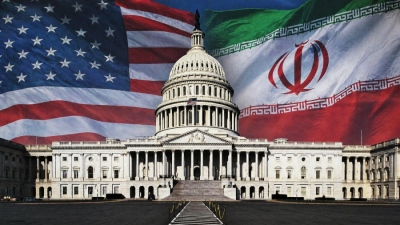
Oil prices recorded a strong rise on Wednesday, April 29, 2026, with Brent gaining about 3% and touching its highest level in a month. The rise is attributed to reports stating that the United States is considering expanding the blockade of Iranian ports, a fact that could prolong supply disruptions from a critical production region in the Middle East. According to Wall Street Journal information, US President Donald Trump has asked his associates to prepare a plan for a more extensive blockade of Iran. The goal of this move is reportedly to further pressure the country's economy and oil exports through restrictions on navigation to and from Iranian ports. Despite the ceasefire between the US, Israel, and Iran, the situation remains fragile, with the conflict leading to a stalemate and the sides seeking a more permanent settlement.
Eighth consecutive day of gains
In the markets, Brent futures for June increased by 3.33 dollars, reaching 114.59 dollars per barrel, marking the eighth consecutive day of gains and the highest level since late March. Correspondingly, US crude (WTI) gained 3.6%, touching 103.48 dollars per barrel, its highest level since mid-April. Analysts estimate the rise is directly linked to developments in the Strait of Hormuz, which remain of pivotal importance for global energy flows. As noted, a potential extension of restrictions could further worsen supply disruptions and bolster prices. Meanwhile, the Abu Dhabi National Oil Company informed some customers it might perform crude loadings outside the Persian Gulf next month, as the situation in the region remains uncertain.
The role of the Emirates' withdrawal from OPEC
Meanwhile, markets are evaluating the sudden decision of the United Arab Emirates to withdraw from OPEC. Although analysts do not expect an immediate impact on prices, they point out that the move reflects deeper tensions within the organization. As international firms note, the trajectory of prices continues to be determined mainly by geopolitical factors, inventory levels, and supply chain developments, while in the long term, production increases may strengthen market supply. Finally, investors await official data on US oil inventories, with early data already showing a second consecutive week of decline, further strengthening upward pressure on prices.
www.bankingnews.gr








Σχόλια αναγνωστών